

An Art Show for Optimism
Come in, you’ll feel better

I’m sure I speak for many of us when I say that it’s been a challenge to focus on anything this week besides what’s happening on the streets of Minneapolis right now. I’m struggling to put together a newsletter that outlines small apartment upgrades that make a big impact or presents 30 items to shop that look like they came from Elsa Peretti’s house when tomorrow, thousands of people across the country will be participating in a general strike.
Which is why I’m sending this a day early. I considered skipping this week’s newsletter altogether, which would be the first time I’d miss a week in the three years I’ve been writing it, but to do so felt like a missed opportunity to put something hopeful out into the world. Art can be an escape, a statement, a reflection, a protest, or all of the above at once, and I find myself turning to artists like some people turn to bible verses or poetry when seeking guidance or understanding.
I reached out to Kelsey Rose, archivist of the Eames Office and writer behind Absolument !, to ask how art helps her navigate times like these. “Art is all-encompassing in my life on a daily basis, and when moments feel tougher, I buckle down on making sure my eyes and spirit are extra-saturated in it,” she shared. “Whether I’m making it myself (painting, writing, photographing, knitting) or consuming it (reading, museum visits, staring at a painting on my wall), I’m always thinking about how, in the end, stories about art are stories about people. They’re narratives about how we’ve experienced elation, vulnerability, overwhelm, awe, stress, loneliness, courage, distraction, excitement, fragility, relief, optimism, pride, sympathy, shock, and misery. Everything!”
When I talk about art, I’m not just talking about Art-with-a-capital-A—profound, “important” works that carry cultural significance—but really, artmaking in general, the things people create and share to make sense of what they’re thinking and feeling. My Instagram feed has been filled with works by illustrators and collage artists and painters and textile artists and type designers and photographers all week, some that were created in response to the events of the week and some that have been relevant for decades. I find it heartening that, when something heinous is happening right there in front of us, it’s the artists who show up first.
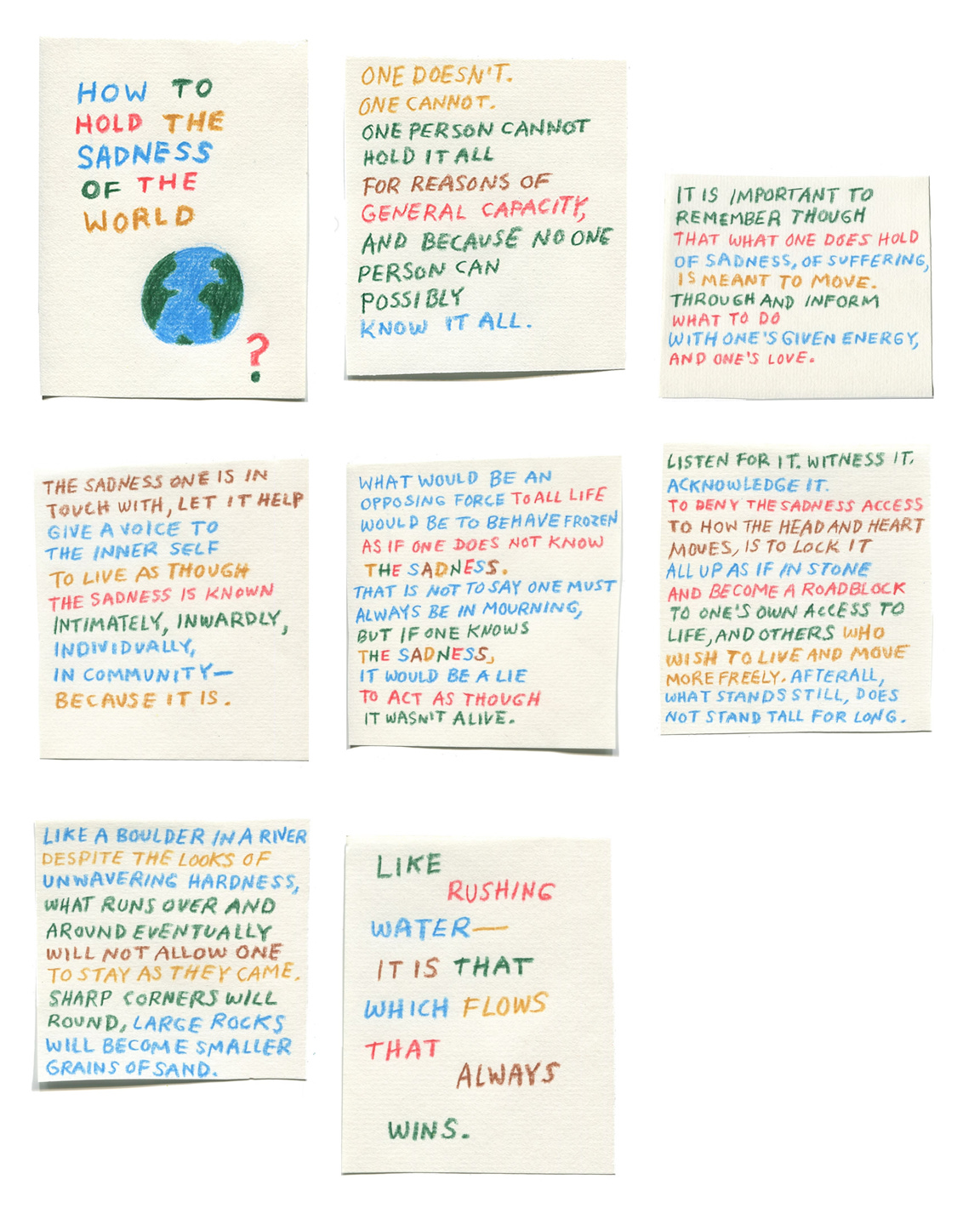
“I’ve been using art as therapy since I was little—making it, looking at it, finding new artists,” my friend Rose Florence wrote me when I reached out for her thoughts. “It has a way of expressing the inexpressible—and isn’t that what we need right now?!”
And I agree! So, I thought I’d share some of the artworks that a handful of you sent me when I asked what brings you hope. I received dozens of submissions, and I was pleasantly surprised to find that there were consistent themes throughout many of them: matriarchy, community, observation, nature… There’s a real softness to a lot of what’s here that brings me a lot of comfort, and I hope it will to you, too. So let’s pretend we’re all at an art show, and all of these works are on display, and together we’re celebrating the joy and solidarity and resistance that art brings with it.
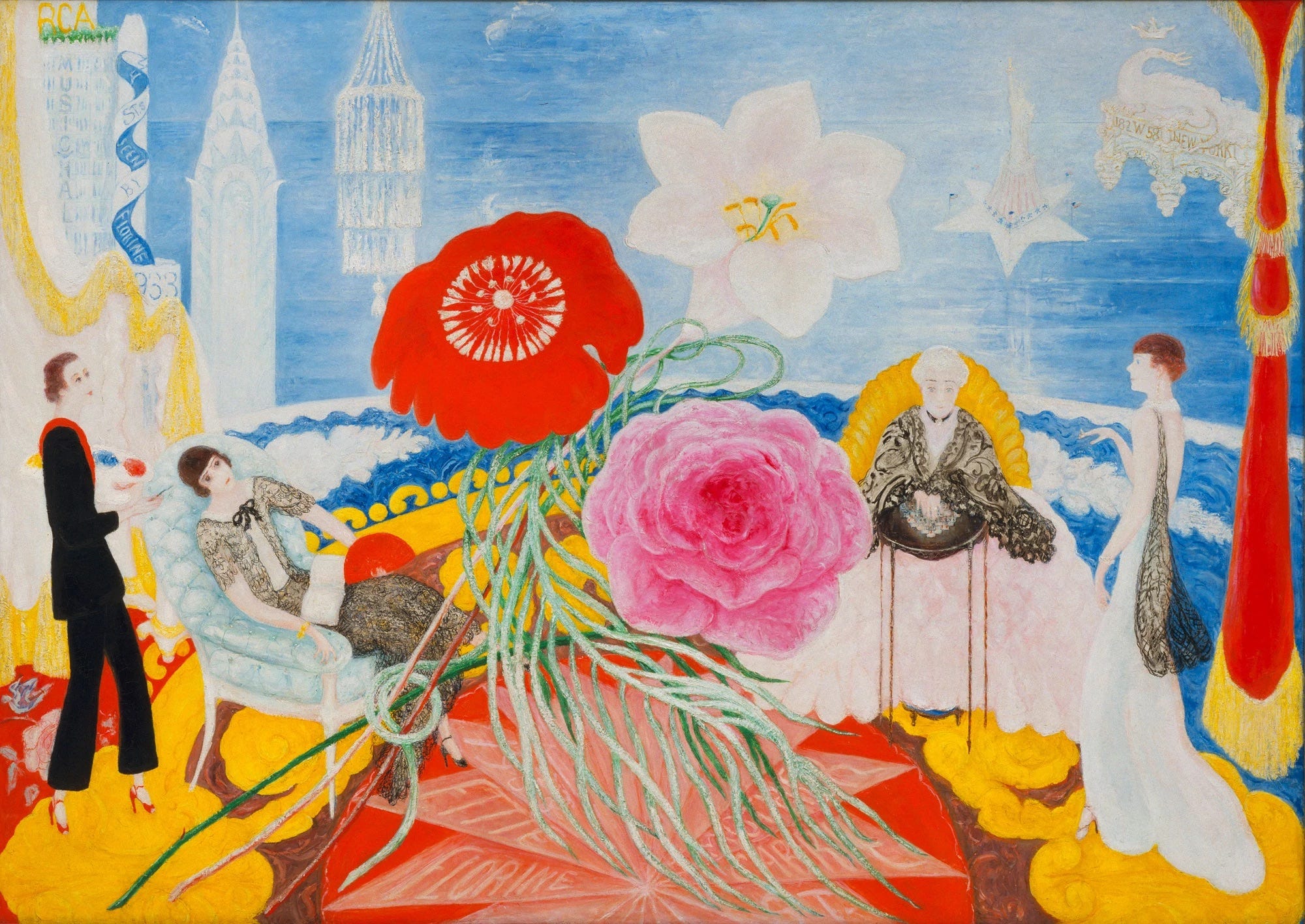
Florine Stettheimer, Family Portrait II, 1933
Submitted by: Morgane Richer La Flèche, artist
“This painting of [Stettheimer’s] family, with its focus on her home and the giant flowers reflecting the strength of her inner world, brings me hope. A lot of her work has a bit of bite and is satirical (notwithstanding the loveliness), but she was really close to her sisters and mother and built her own world on her own terms, and she believed sincerely in the power of art to shape experience.
Hockney has this phrase: ‘The duty of the artist is to overcome and alleviate the sterility of despair.’ Whenever I think what I do is pointless, I try to think about that. Despair is a dead zone; nothing can grow there. If I can make an image that creates a little sliver of possibility (even if it’s tiny, like a surprising color or image!), I try to think of it as helpful.” — Morgane
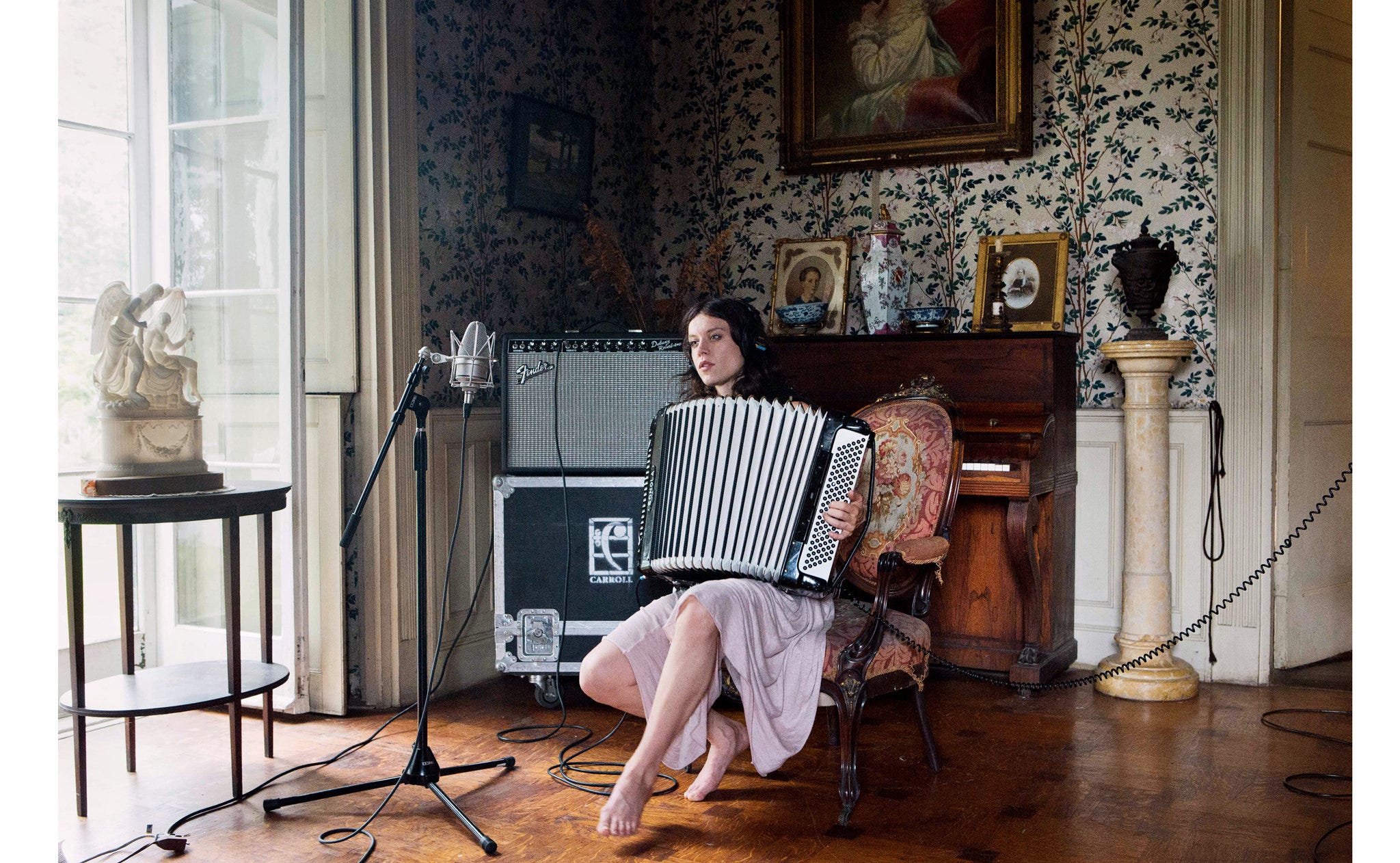
Ragnar Kjartansson, The Visitors, 2012
Submitted by: Suze, writer of Ok, Perfect
[Editor’s note: For context, The Visitors is an installation and video art piece displayed across nine giant screens, each focused on a different musician in different parts of an old house, performing an hour-long song simultaneously. It was on view at The Broad a few years ago, and until Suze mentioned it, I had completely forgotten about it, but watching it back just now brought me right back to sitting in that room with full-body chills. It’s a meditative experience—watch it here.]
“I think a lot of what I feel about [The Visitors] has to do with the scope—the number of screens and performers (and the size of the screens at The Broad), but also the sheer duration of the performance and the repetition of the very simple melody and lyrics. The music makes me feel something very primal, more in my body than my head at first. The piece has the cadence of a religious litany or chant, and I find it very alluring, especially in conjunction with the visuals of this beautiful, decaying estate. The closest analogue of an artwork that made me feel similarly is The Testament of Ann Lee; the beat and movement of the choreographed hymnal numbers had a similar effect on me. There’s a scene at the beginning of that film when Ann Lee first attends a Shaking Quaker meeting, and she finds herself involuntarily breathing to the rhythm of everyone else in the room. That’s what it felt like in The Broad—a coming-together of separate people, not just in the piece itself but also everyone in the installation room in the museum, having this communal experience together. The whole is greater than the sum of its parts! I wasn’t sure if I would actually use the word ‘hopeful’ to describe how I felt about the piece, but after writing this and thinking about it, I realize it is about hope after all.” — Suze
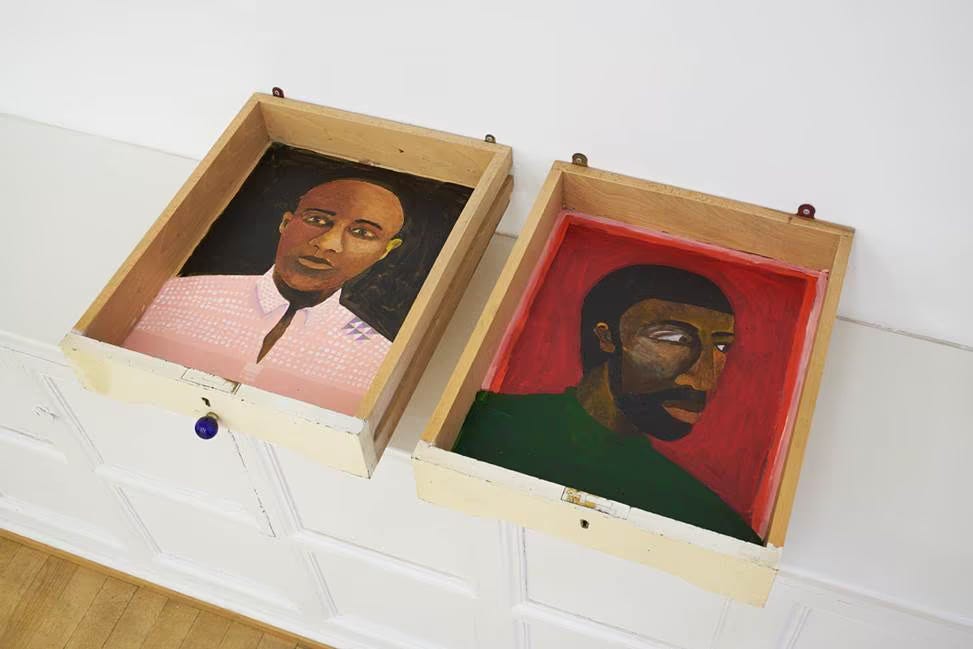
Lubaina Himid, Man in a Paper Drawer, 2017
Submitted by: @rufpop on Instagram
“It’s so hard to choose, as there are many artists whose work brings me hope and joy, but if I had to, it would be Lubaina Himid’s ‘Men in Drawers’ series. The vibrant colors and the beauty of those men, and the idea that something that was discarded held this powerful opportunity or promise to make the invisible visible, [brings me joy]. But also, the surprise of finding such beauty at the bottom of a drawer.” — Magda
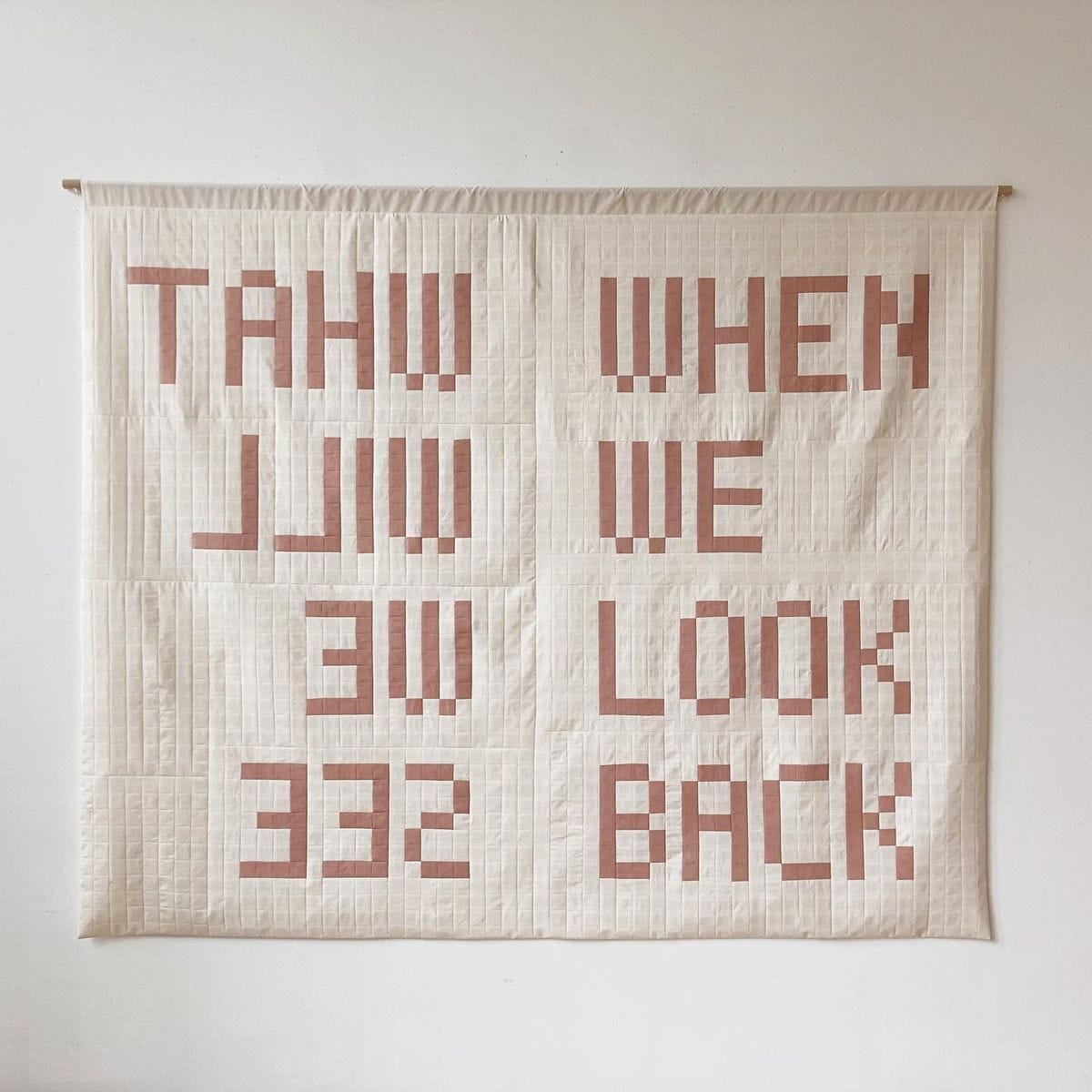
Ashley Brown Durand, What will we see when we look back, 2019
Submitted by: Me :)
This one is one of my picks. I saw this on Instagram back in 2019 and have revisited it (and repeated it in my head) often since. I use it as a sort of guiding question for my own life. Will future me be proud of how I showed up in the world? What will I see when I look back?
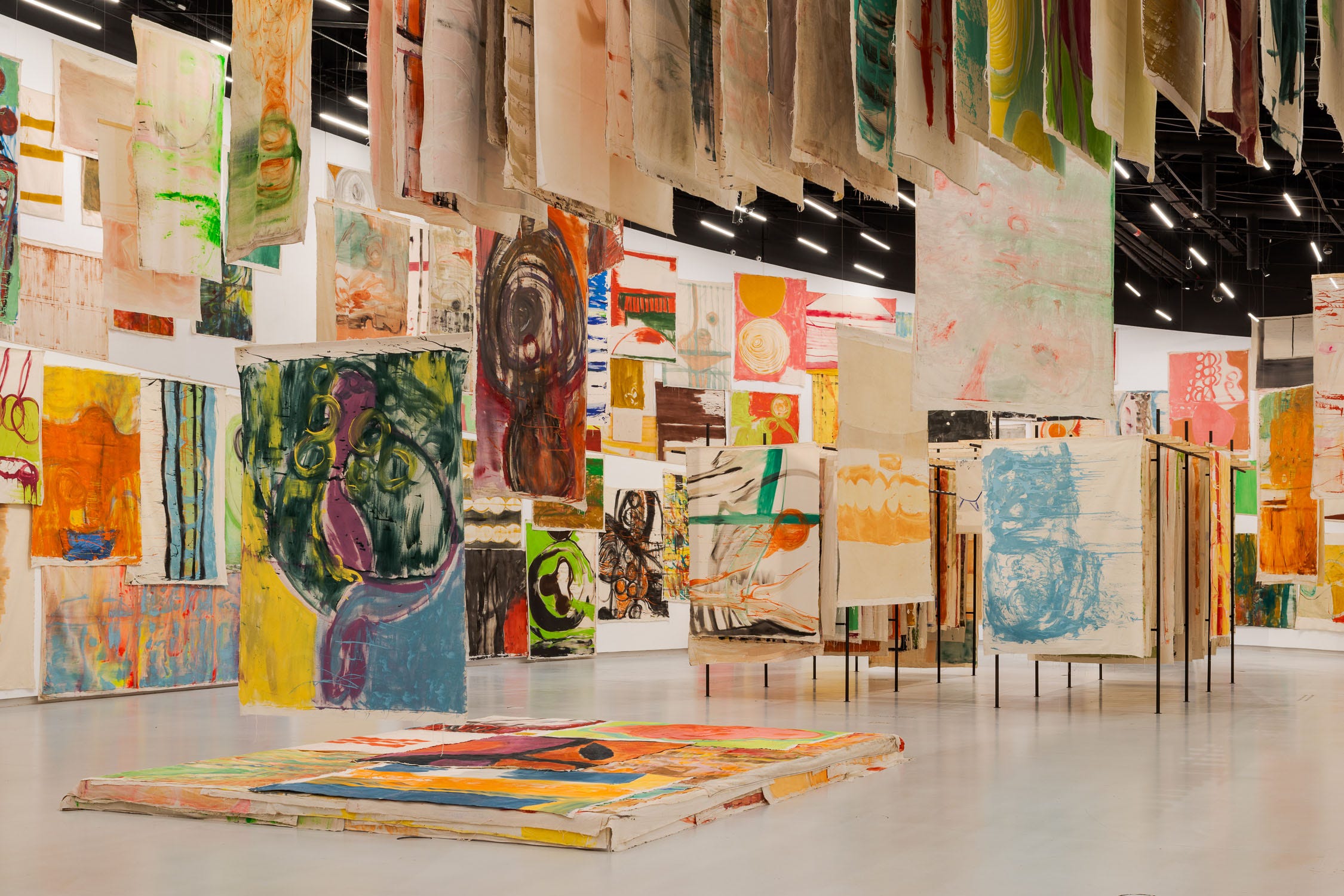
Vivian Suter, “Disco” at Carré d’Art, 2025
Submitted by: Marina Strigari, writer of The Geewees
“I saw an exhibition of Vivian Suter’s in Paris and I was blown away by her work and her life story. I have been coming back to it often when I feel hopeless. She lives in the forest in Guatemala—she is fascinating.” — Marina
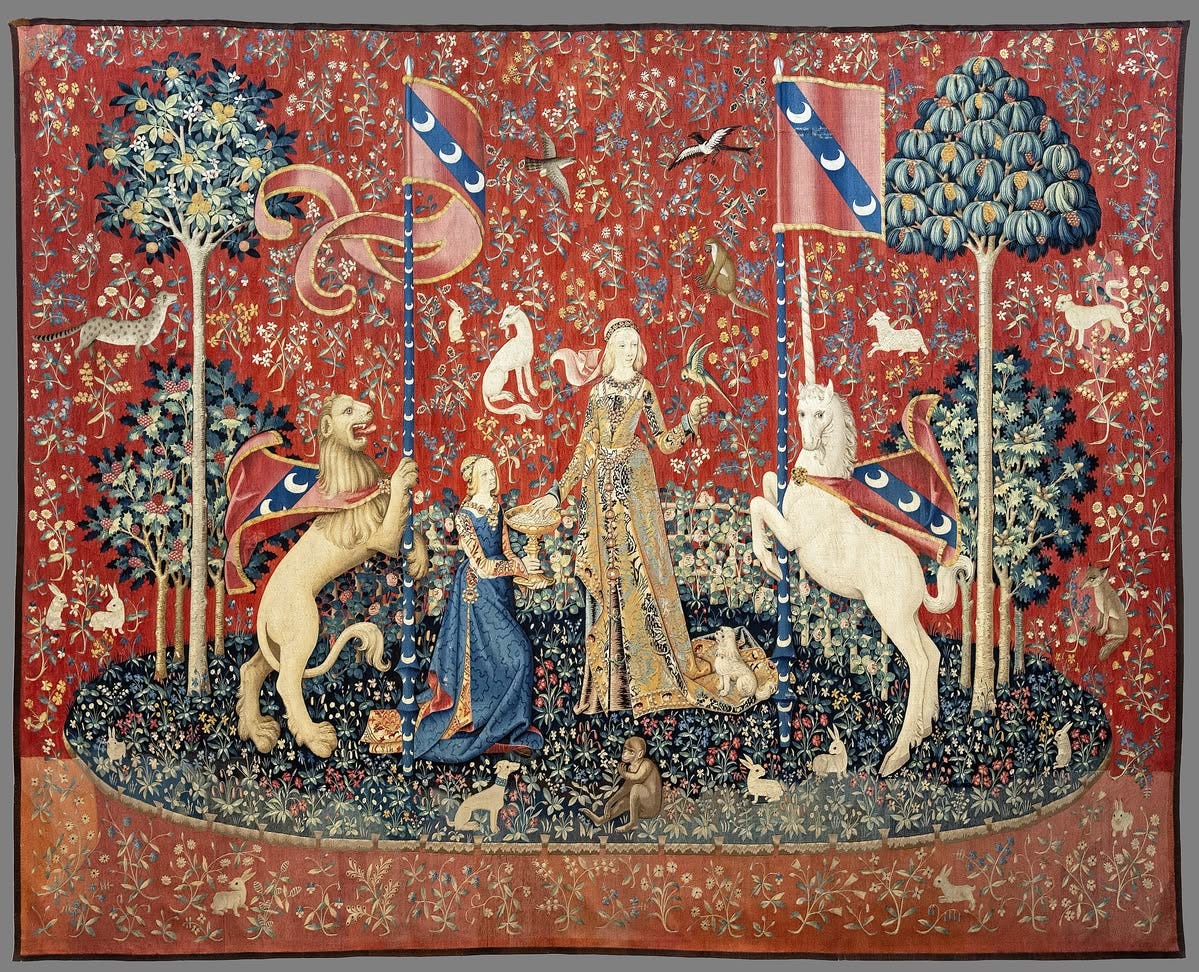
The Lady and the Unicorn tapestries, c. 1500
Submitted by: Madeline Warshaw, owner of Minneapolis-based home goods store Madge
“I got misty in front of the Lady and the Unicorn tapestries [at the Musée de Cluny in Paris]. There’s a lot of mystery to these tapestries, their origin and meanings, but when I looked at them, I glimpsed for a brief moment a vision of the art that could have existed in a world without patriarchy. To me, they are soft, gentle, about the love of animals and nature and beauty and female friendship, a far cry from the doctrinal religious art that dominated the time. They felt like such a breath of fresh air, a window into a different past and future, and a radical portrait of something maybe we aren’t meant to see, but do anyways.” — Madeline
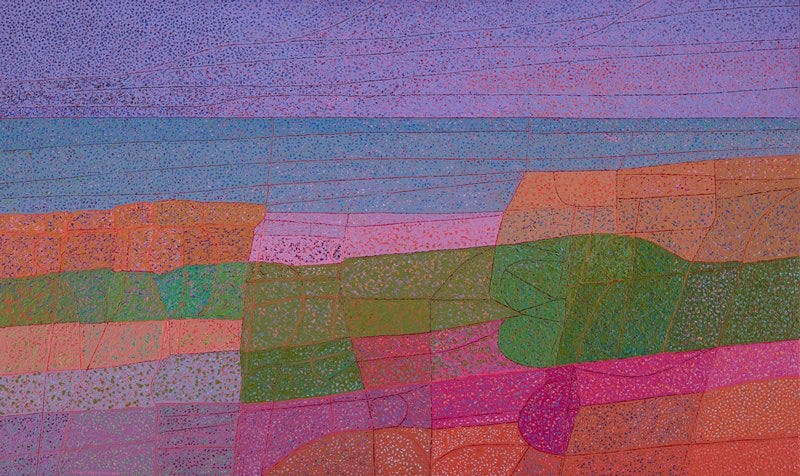
George Morrison, Lake Superior Landscape, 1981
Submitted by: Rose Florence, writer of The Rose Period
“I just changed my screensaver to this work by George Morrison—it’s like a little spark of joy every time I open my phone. He was an Ojibwe artist who now has a major exhibition at The Met, and knowing that someone from Minnesota (where I grew up) ended up here feels very timely right now. Just look at that color!” — Rose
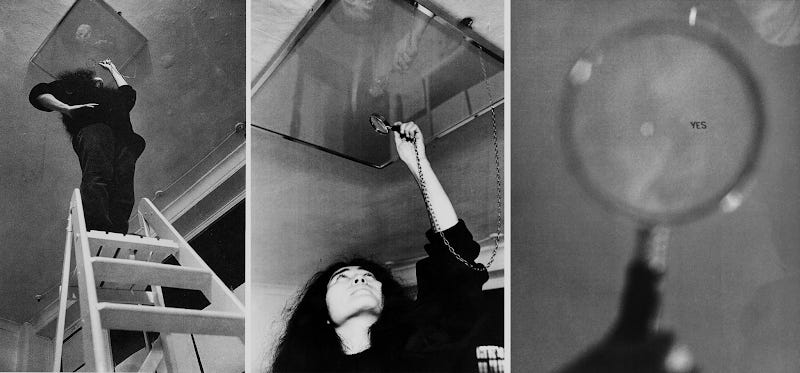
Yoko Ono, Ceiling Painting, 1966
Submitted by: Katie Vonderheide, muralist and sign painter
“Is it so cliché to say Ceiling Painting [is my answer]? I think it’s so fitting right now. Yoko Ono said, ‘When I created Ceiling Painting, I was depressed at the time. So I wanted to give some positivity to my life.’ With the analog version of zooming in (using a magnifying glass), you see the word YES, the ultimate positive affirmation.
I absolutely love her instruction paintings as well. Her work is so sincere. I always feel like it pulls me outside myself (an often much-needed perspective) while simultaneously setting off my imagination.” — Katie
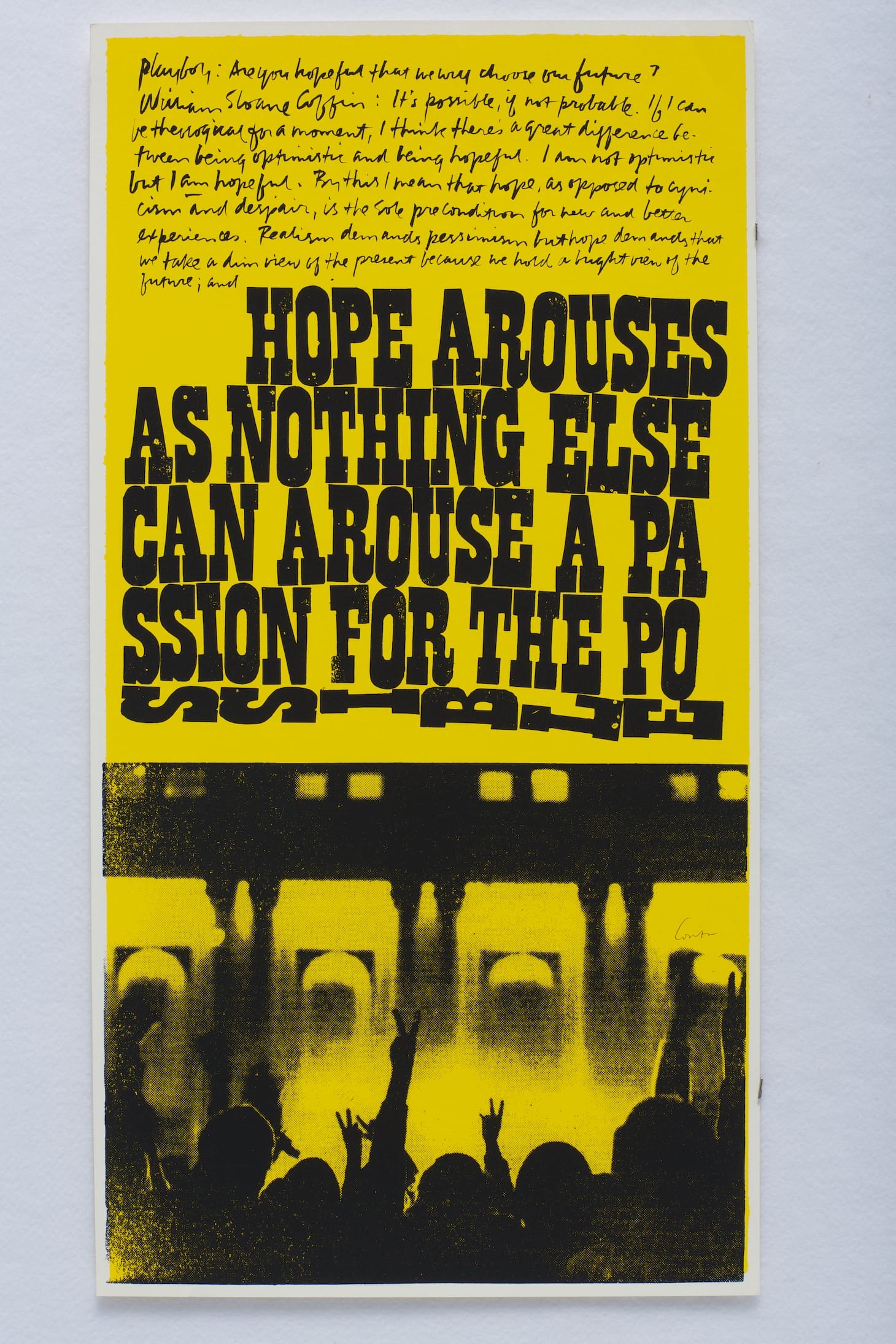
Sister Corita Kent, a passion for the possible, 1969
Submitted by: Kelsey Rose, Eames archivist and writer of Absolument !
“Sister Corita Kent’s politically tinged artwork has been on my mind a ton lately. She was a Sister at the Immaculate Heart turned art educator and printmaker, known for her vibrant pop art-style serigraphs, which combined themes of social justice and spirituality. Corita worked most prolifically through the 1960s and ‘70s, addressing racism, war, political injustice, civil rights, poverty, and sexism. Her words were even more radical because she was a woman and because of her religious positioning. I think she really channeled the heart of these heavy, impossible issues and translated them into encouraging, motivational messages for the masses. They were invitations to take action against inhumane behavior—especially against the government. Corita is still teaching us, and I would love for everyone to feel motivated by her!” — Kelsey
[Editor’s note: I pulled this one too! It’s hard to choose just one of Sister Corita Kent’s pieces, but this one speaks to our current times so clearly: “I am not optimistic but I am hopeful. By this I mean that hope, as opposed to cynicism and despair, is the sole precondition for new and better experiences. Realism demands pessimism but hope demands that we take a dim view of the present because we hold a bright view of the future; and hope arouses as nothing else can arouse a passion for the possible.”]
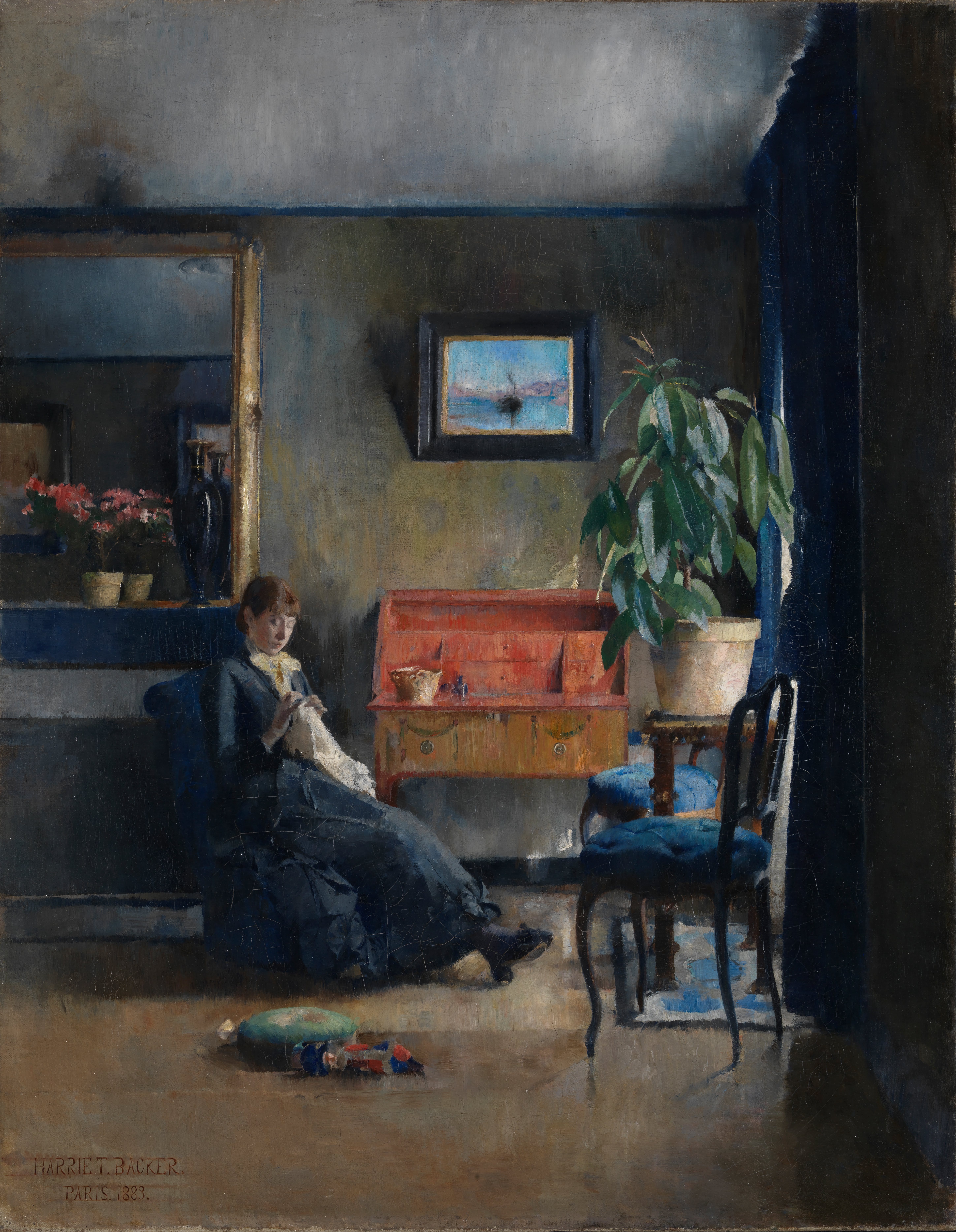
Harriet Backer, Blue Interior, 1883
Submitted by: @siiiiigrid on Instagram
“There is something about mending things that always seems to make me feel better, and the interior reminds me of this. There are so many things going on in the world that I can do very little about, but I can make attempts at mending things I care about. There is hope in the idea of people fixing things, however small they may be.” — Sigrid
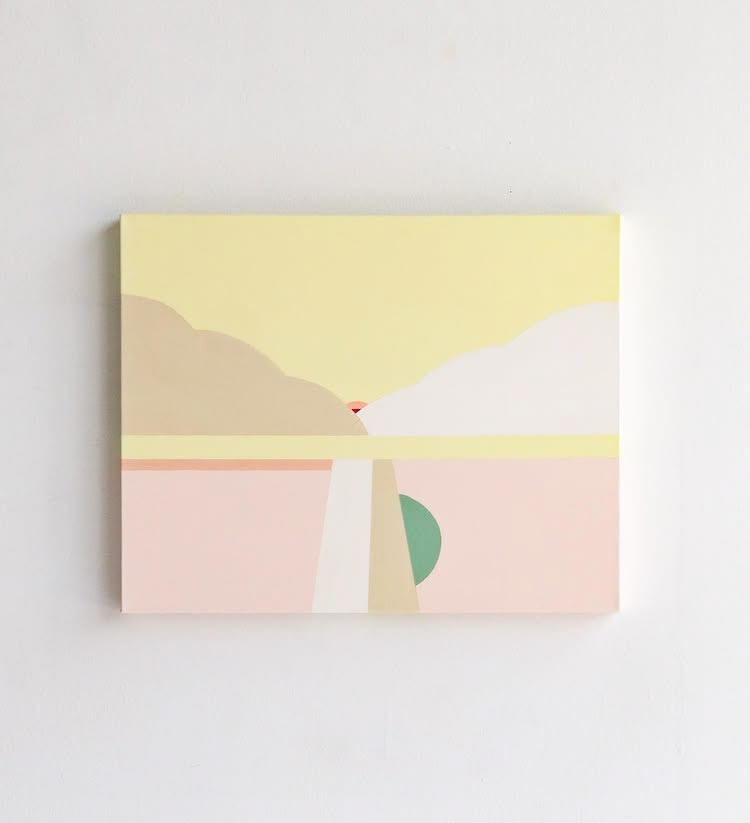
Hannah Dean, Big Plans, 2022
Submitted by: @jenn.zutter on Instagram
“I find these landscapes to be particularly hopeful. In fact, I purchased this piece after my mom passed away in June of 2022, and I’ve found myself going into the room where it hangs more often these past few weeks in light of recent events. It’s fitting that my mom started her social work career as a race relations coordinator and was an ally, advocate, and activist.” — Jenn

A huge thank you to everyone who wrote in and shared what brings them hope—I couldn’t include all of your submissions, but maybe we’ll “reset the gallery” sometime soon and do it all again. Feel free to share your own comfort artworks in the comments—I’d love to see.
x
Ali
If you enjoy reading À La Carte (thank you!!!) and want to show your support for my work:
Throw a like or comment on this post
Share this post with someone who might be into it
And if you’d like to partner on an issue of À La Carte, shoot an email over to hello@alilabelle.co!
An Old Soul’s Guide to Turning 36

I often joke-but-not-really that I have a ways to go before I hit my peak, which I suspect will be around 75. I’m an old soul in every way, and I have been since birth.

Five Years of Working for Myself

This week marks five years since I sat down at my dining table, opened my laptop, and began working for myself. It was such an anticlimactic “first day”—we were mid-pandemic, and there wasn’t much on my to-do list, really—but I actually got dressed, put makeup on, and treated it like the personally significant morning it was.
Just what I needed today! Thanks for including me Ali :') Totally forgot about Florine Stettheimer! An NY museum needs to do a full retrospective of her work ASAP
What a great idea for an article, really enjoyed browsing the gallery :)