

Art Deco Du Jour
A trend report

“I hate Art Deco,” I overheard a woman admit to her shopping buddy in a vintage furniture store a few weeks ago. “It’s so masculine. I prefer Art Nouveau.” (Italics added for dramatic effect.) I quickly darted my eyes in her direction to peek at what piece of furniture could have prompted this bad take, but ultimately, I couldn’t tell—she was standing near a Brutalist coffee table and some midcentury Danish chairs.
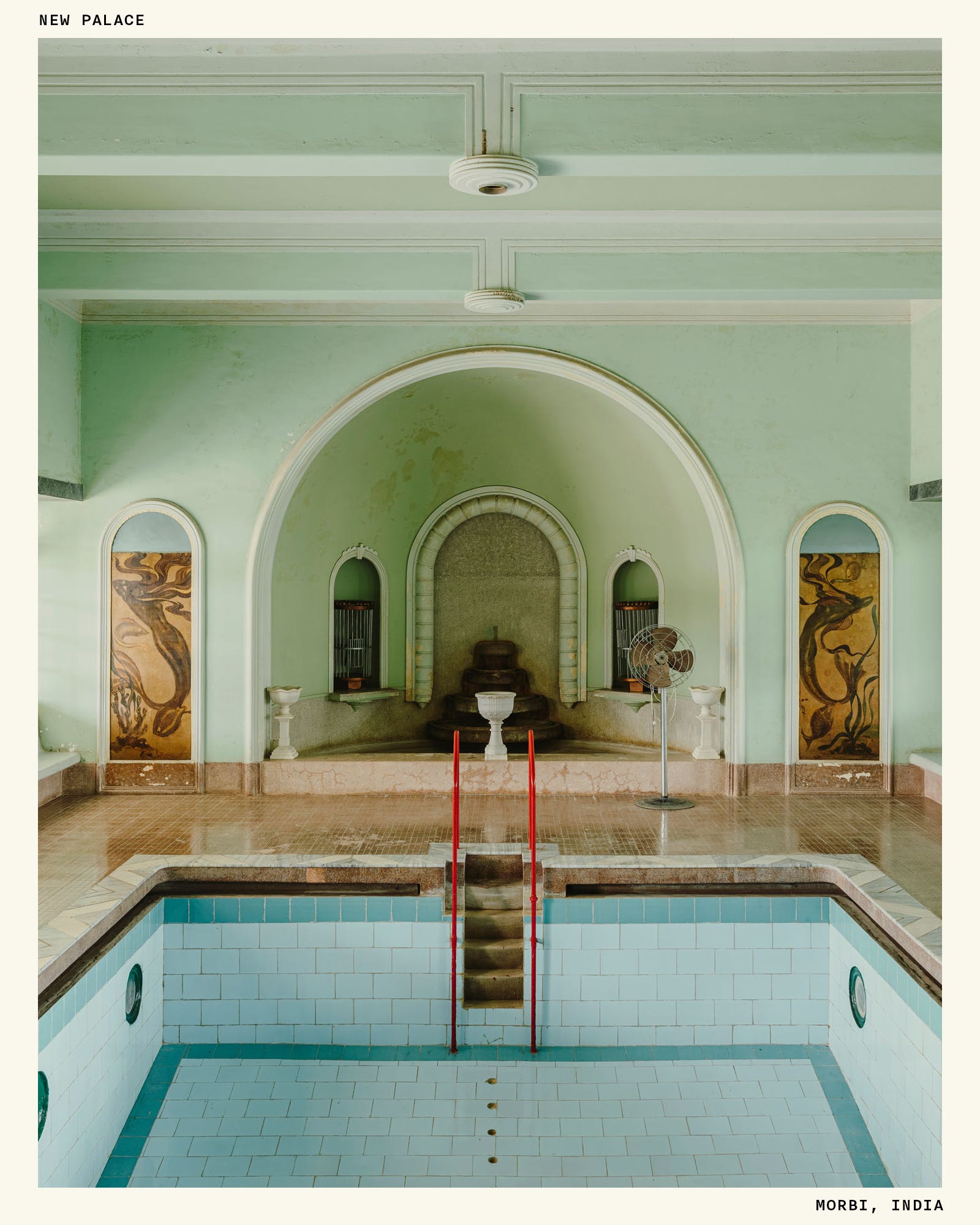
Whether she was misidentifying a piece of furniture or not I’ll never truly know, but as I was scrolling through umpteen pages of beaded bags from the 1920s on Etsy later that weekend, her words kept rolling around in my head. Art Deco is everywhere right now—in fashion, in accessories, in interiors, and beyond—and I just don’t think I’d call it inherently masculine, let alone categorically dismiss it for being so. In fact, Art Deco is about opulence and glamour, an era known for meticulous draping and geometric marble inlays and mirrored finishes. I guess you could look at Art Deco’s symmetrical skyscrapers and clean lines in contrast to its predecessor’s organic shapes and floral motifs and draw some sort of energetically gendered comparison… But unfortunately for her, I’m a snob, and I’m pretty sure she was pointing to that coffee table, so I have to prove her wrong. Art Deco rules.
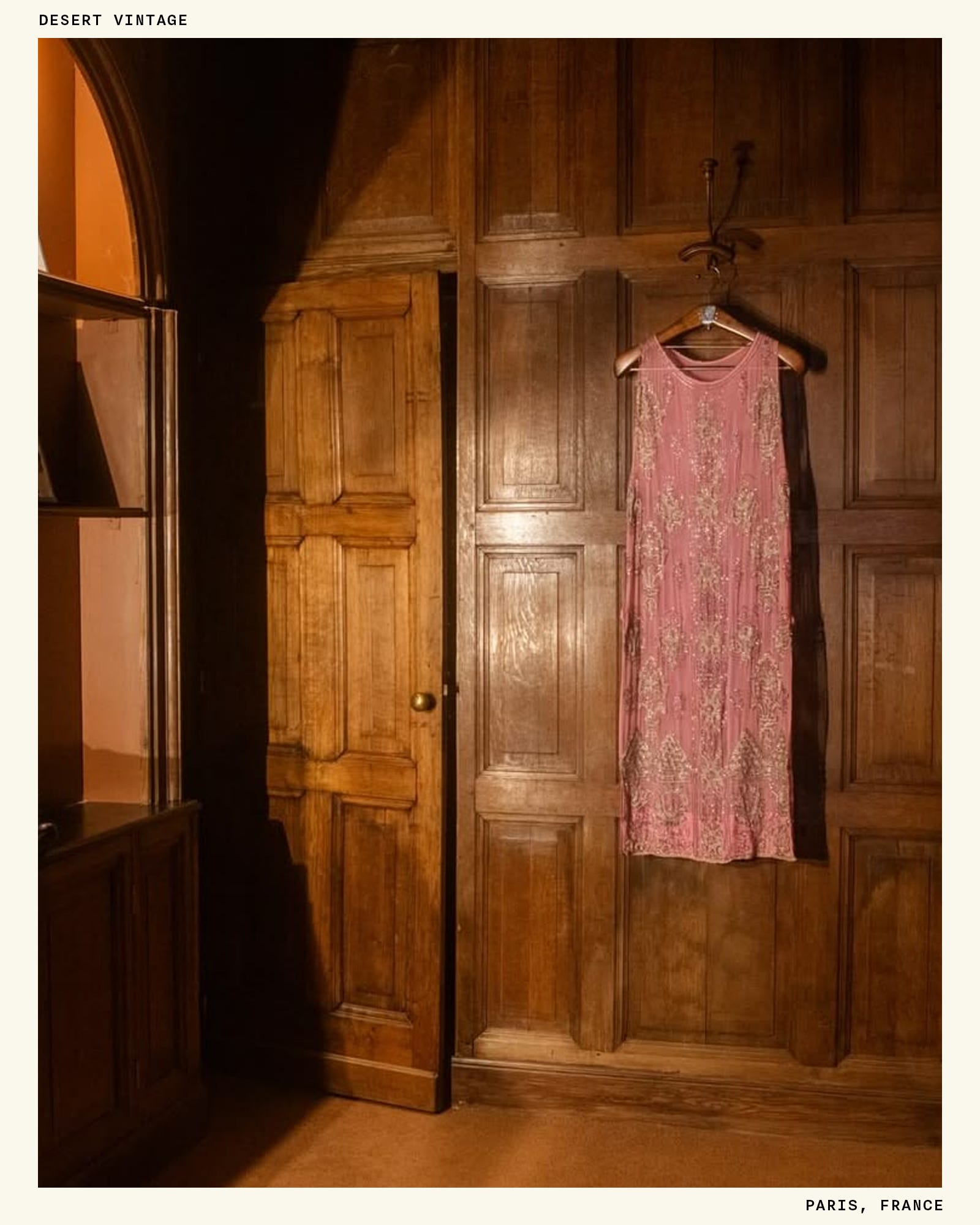
One hundred years after its first go-around, Art Deco is back in a big way. I rewatched Downton Abbey last year and joked that the later seasons looked like they were shot in a dressing room at Bode, but since then, the look has made its way all the way down the pipeline to the fast fashion and mass-market furniture retailers of the world. Contrary to the Cerulean Blue Theory, I don’t think that means it’s over—I think it just points to a collective interest in objects and design notes of another time.
FEATHERS AND FRINGE AND BEADING GALORE
It’s not that everyone’s gone full flapper—I haven’t seen headbands across foreheads quite yet—but we seem to be flapper-curious. Seed beads, tiny feathers, fringe, tassels, and any other embellishments you could imagine are dangling from hemlines and hanging from handbags everywhere you look.
The reprise of the evening handbag, the piano shawl, and the silk flower indicates that the mid-2020s are going mid-1920s too. Whether you’ve scored the real deal (glass beads!) or you’ve found a more modern interpretation, there’s no denying the era’s influence in accessories right now. I’m loving it, and my ever-growing collection of little silk bags and flower pins is proof.
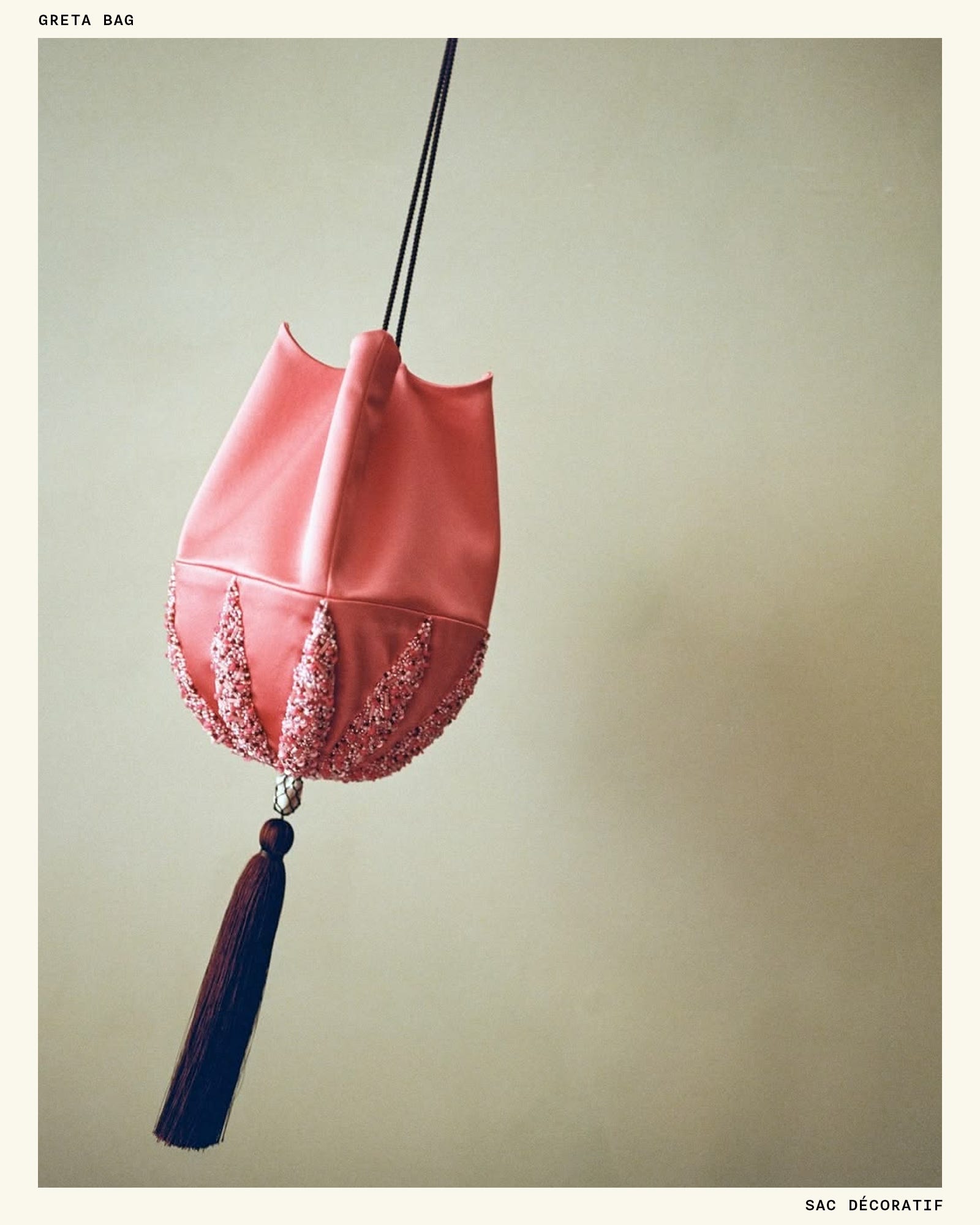
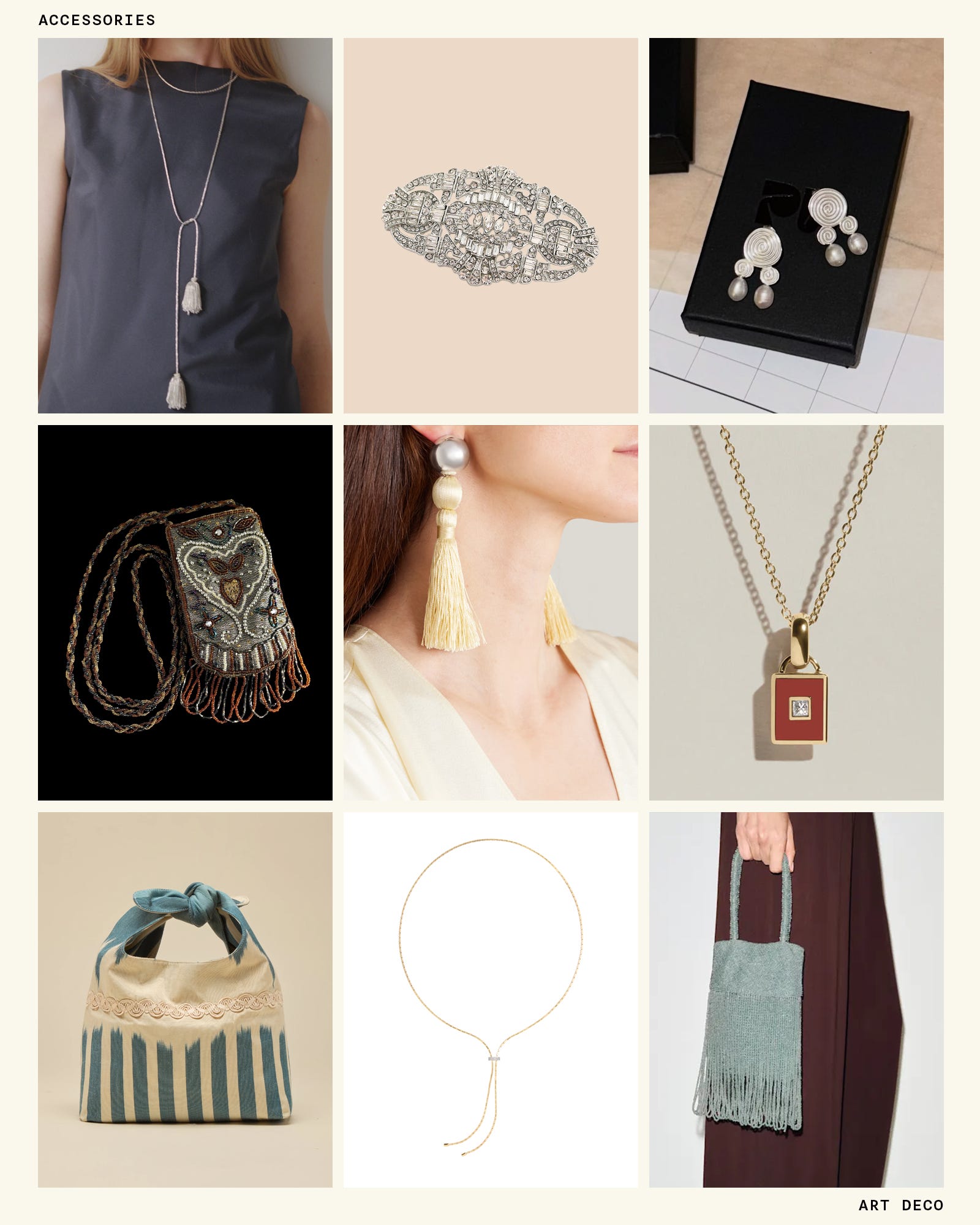
I’m seeing it in jewelry, too—the lariat (a clasp-less necklace you simply wrap around your neck) is popping up here and there, as is the graphic diamond brooch, the geometric pendant, and the tassel earring.
THEATRICAL TEXTILES
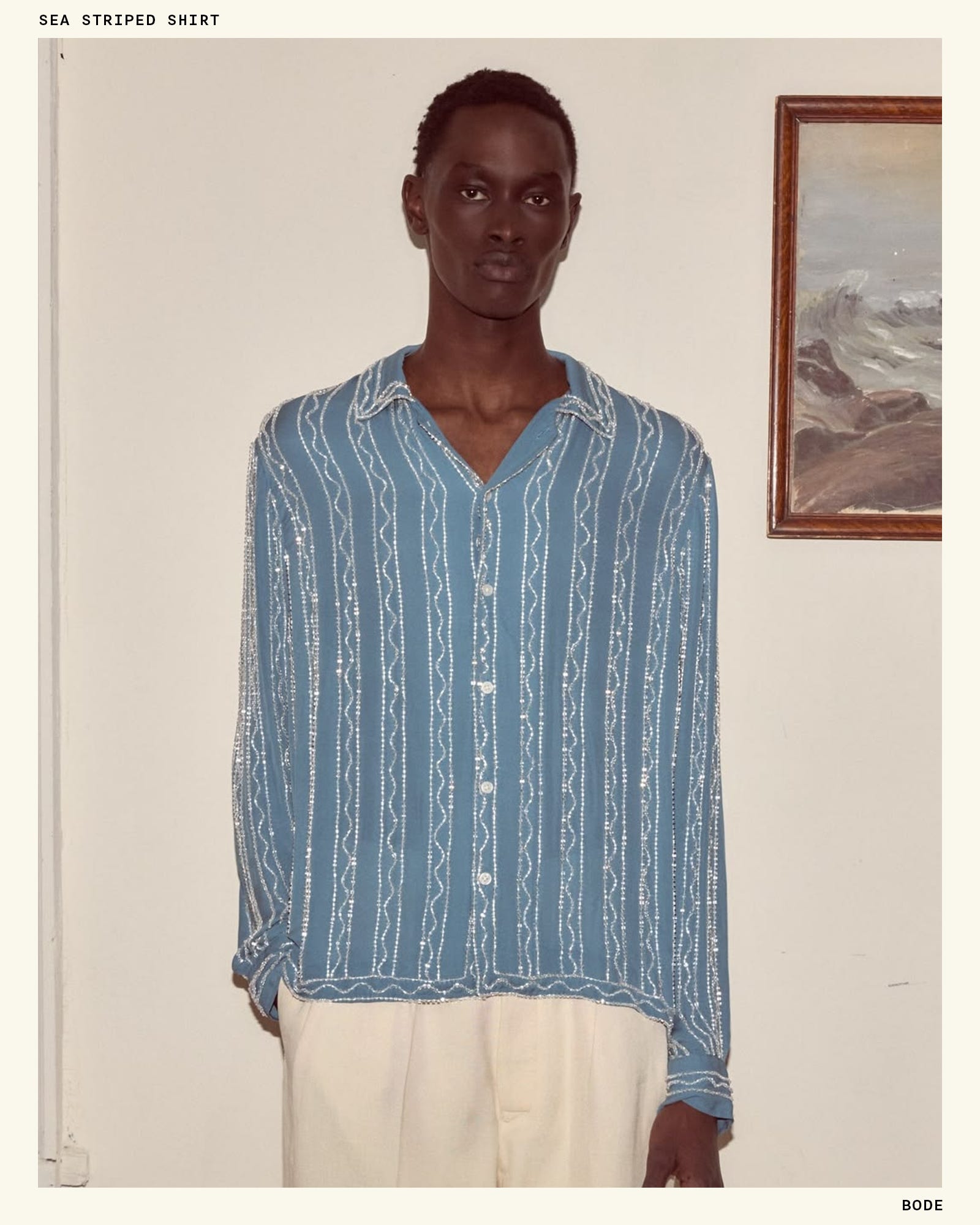
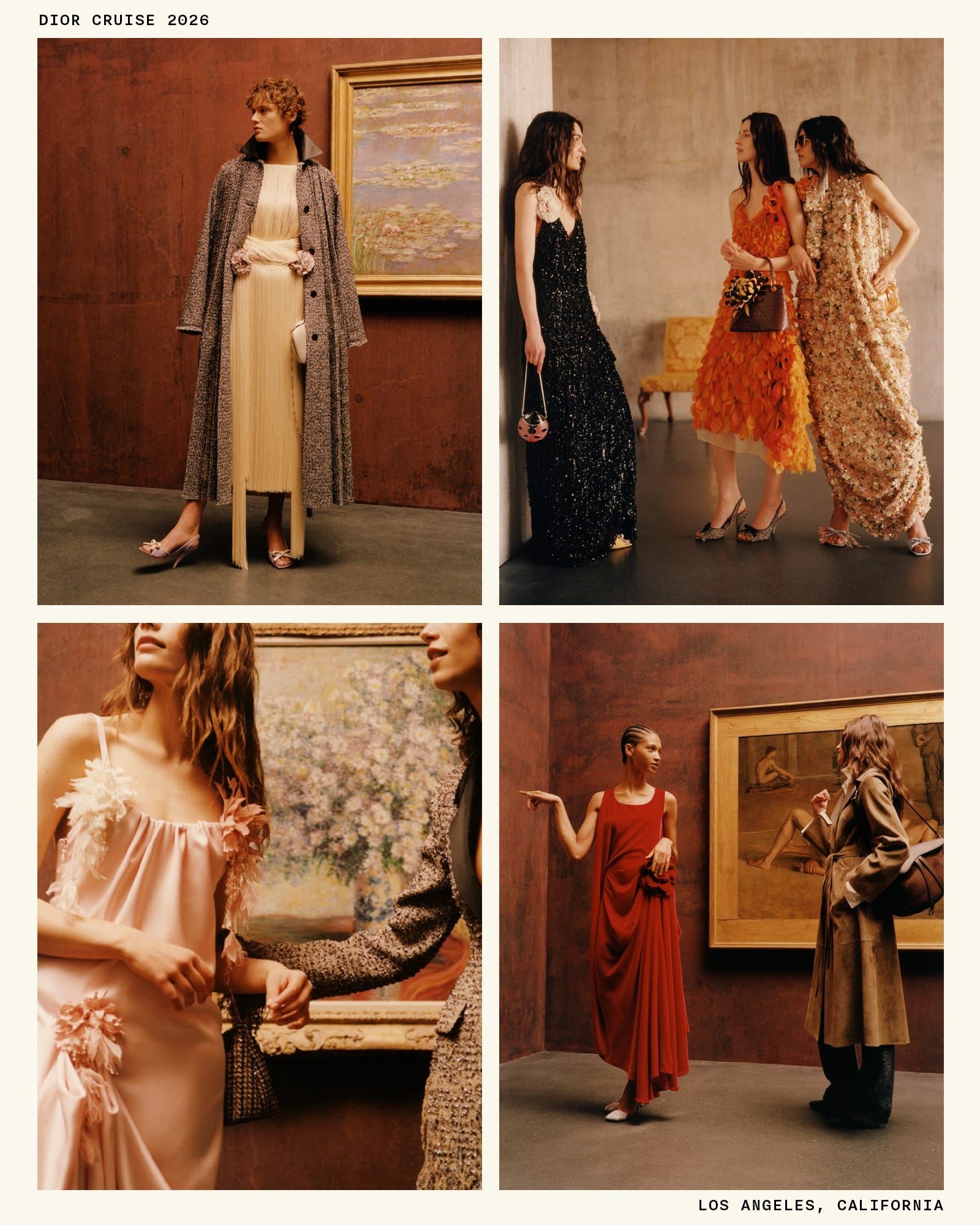
I mentioned here in the newsletter that the models at the Dior Cruise show looked like they had run through a 1920s costume department before they emerged onto the runway. It meant it as a compliment—I love all the textured fabrics, the sculptural drapery, and the longline gowns that each nod to Hollywood’s Golden Age in their own way.
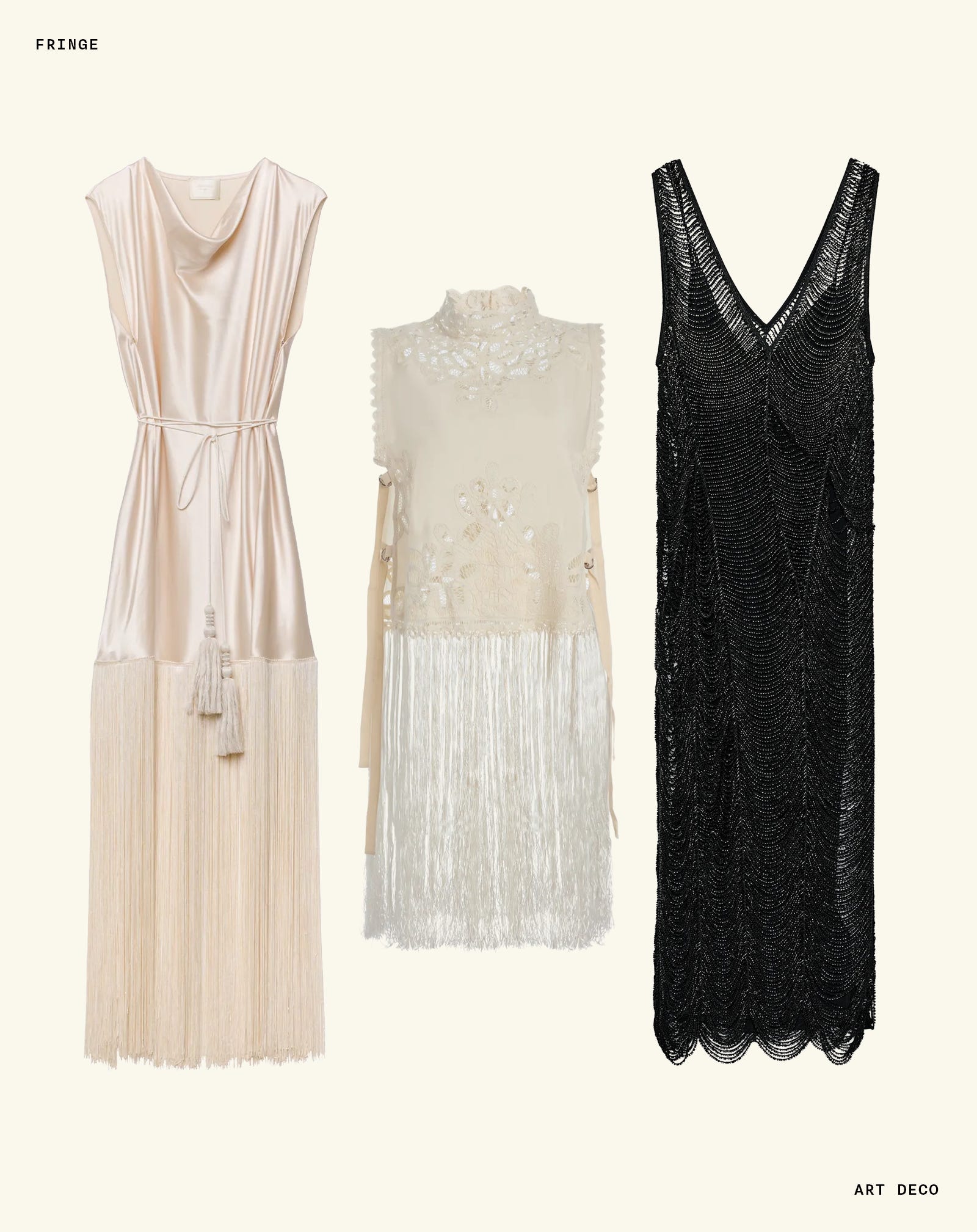
But off the runway, dropwaist dresses, mid-length slip skirts, and fringed tops are aplenty these days, from Sea to Zara to St. Agni to Dôen (and the list goes on). There’s a lot of lace, a lot of silk, and a lot of draping worthy of a cocktail at Sunset Tower.
LAVISH FINISHES
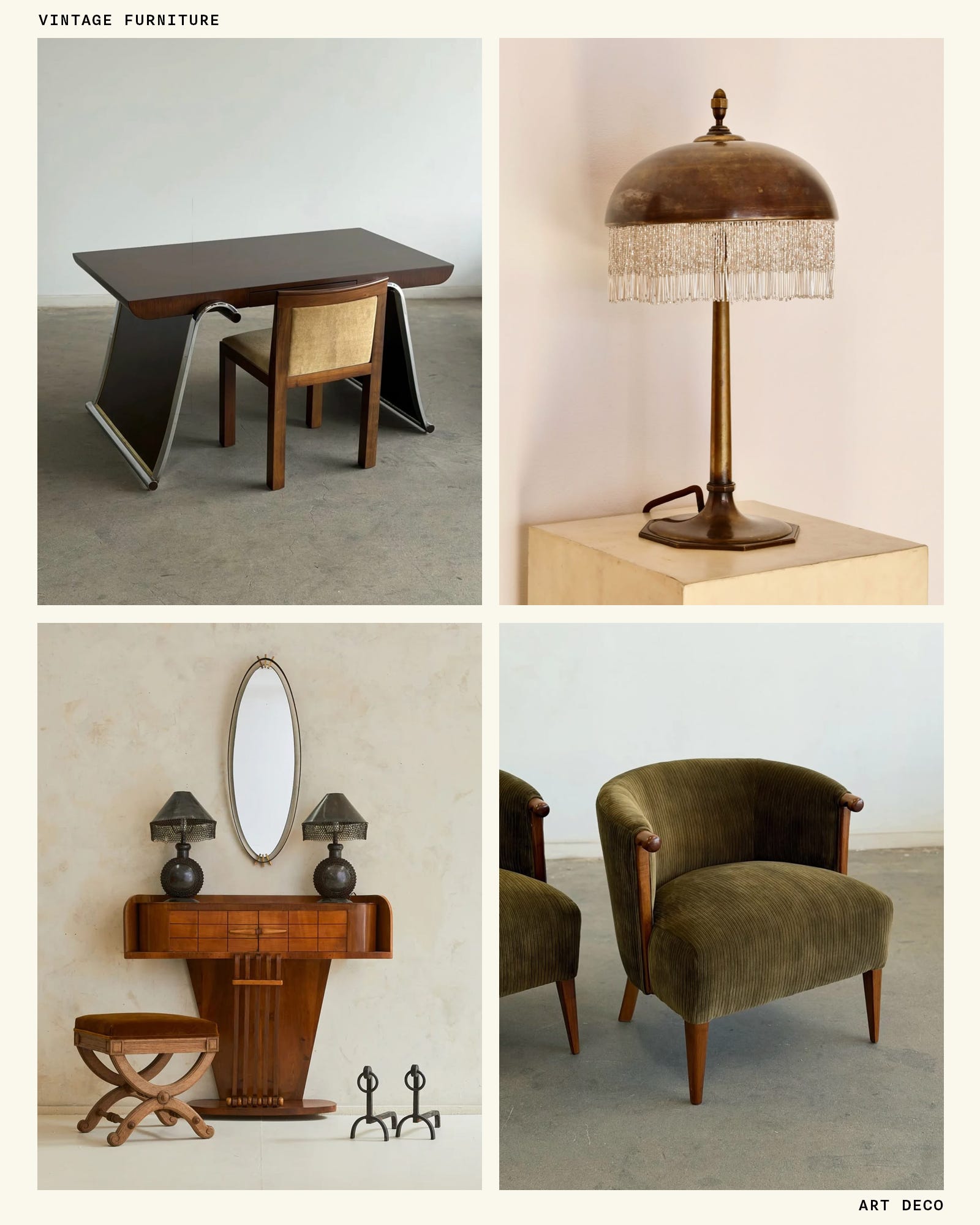
These trims and textiles extend to the furniture world, too. Dramatic fringe has been reimagined into something interesting again, as have decorative cabinet pulls, burlwood cabinets, and lacquered furniture.
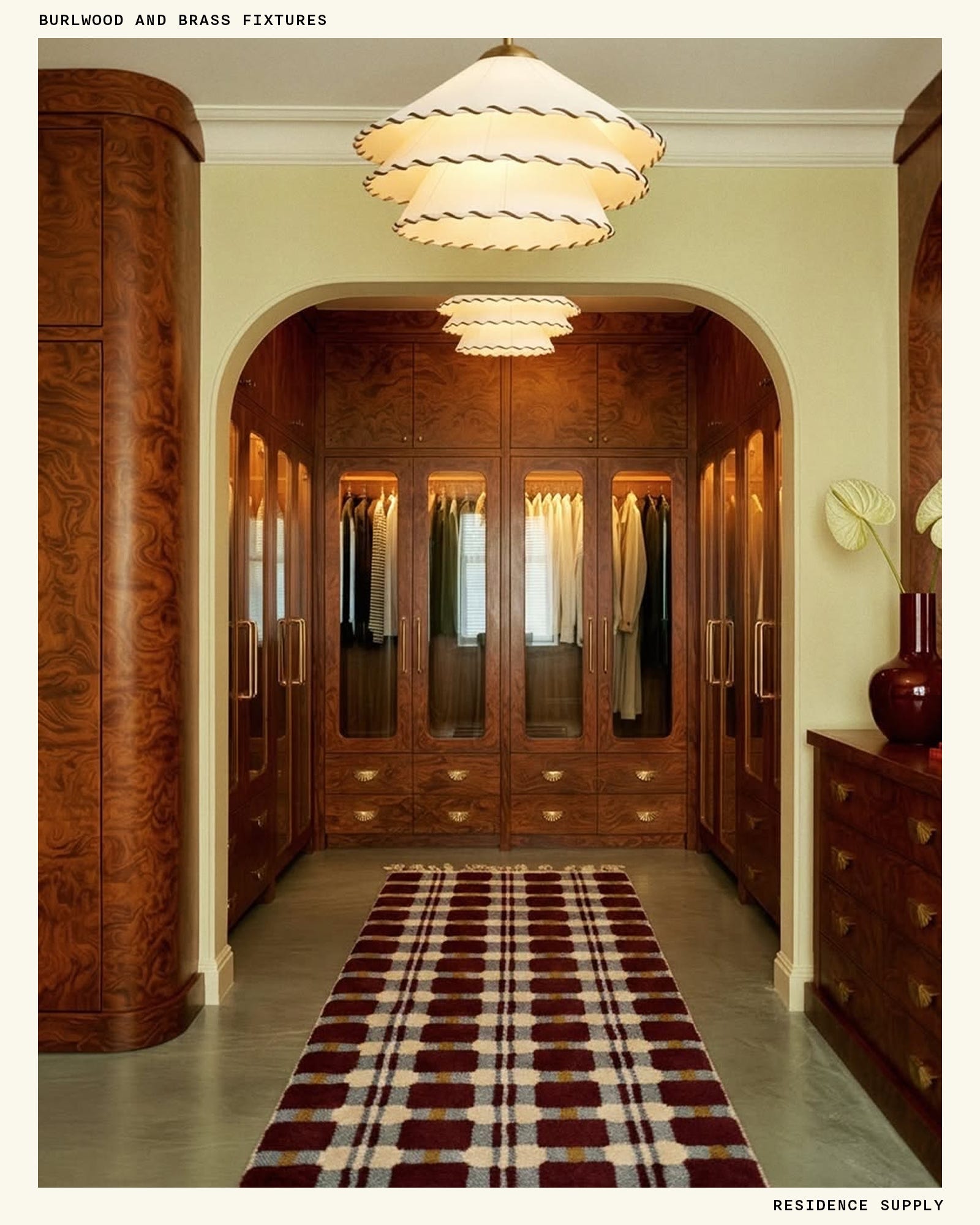
I’ve seen an uptick in Art Deco pieces on the vintage furniture and décor Instagrams, too. I don’t know where it’s been hiding all these years, but I’m personally excited to see it all getting its moment.
A DRAMA REVIVAL
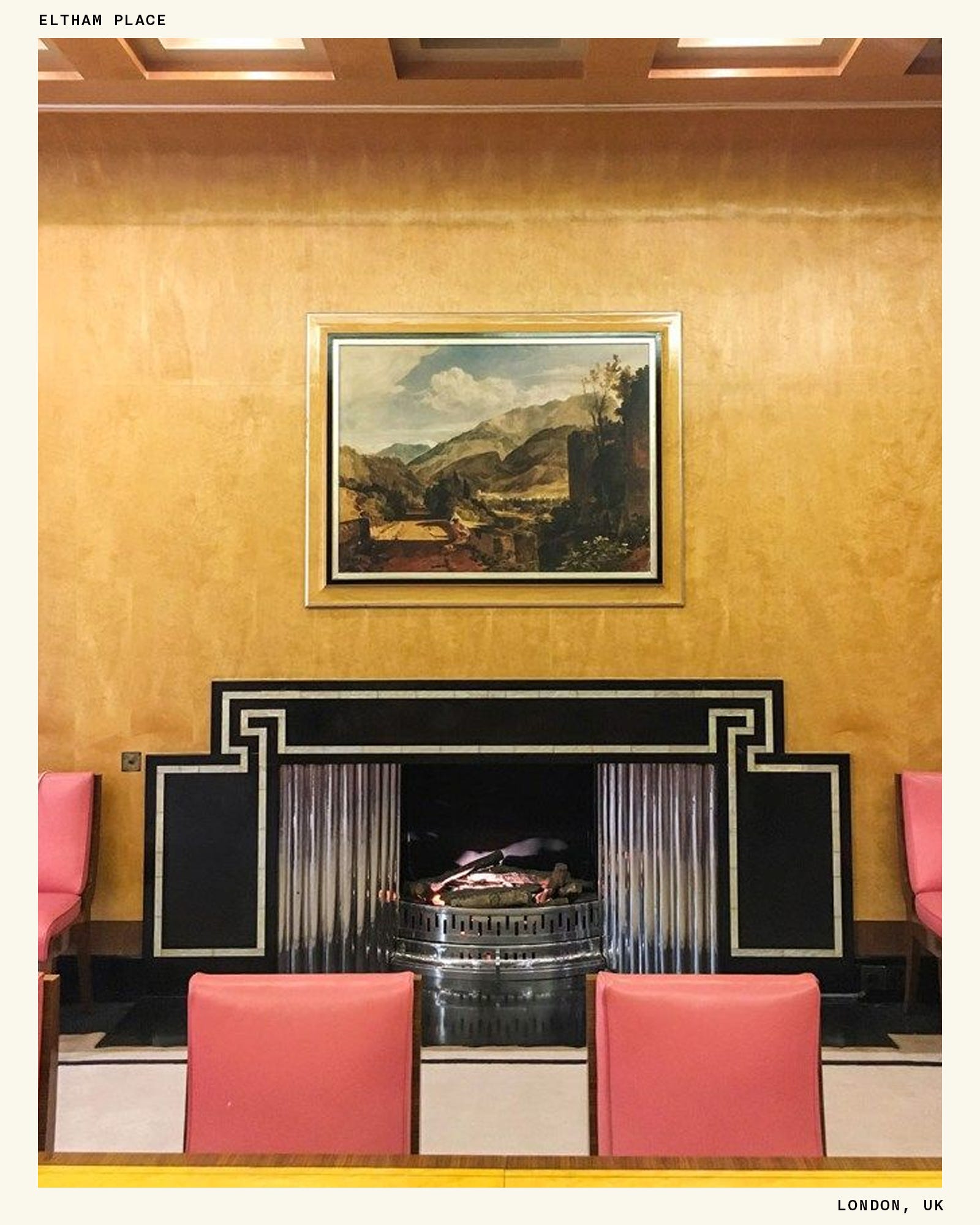
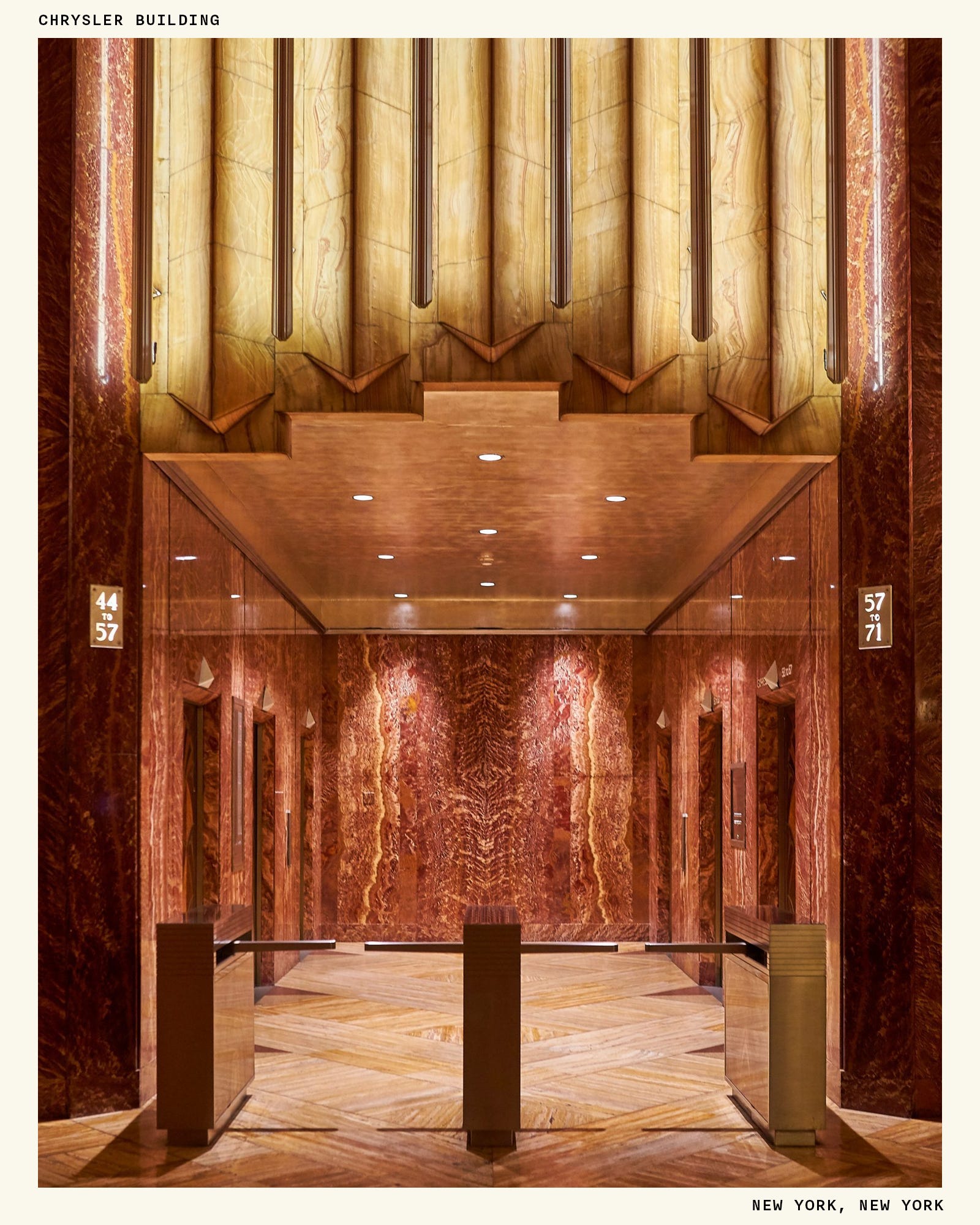
In interiors, both in homes and in commercial spaces, designers are paying homage to Art Deco icons like the Chrysler Building and Radio City Music Hall in ways big and small. Showstopping marble slabs, inlaid mirrors, and hard right angles are a welcome change from the curved doorways and bean-shaped settees of the last decade.
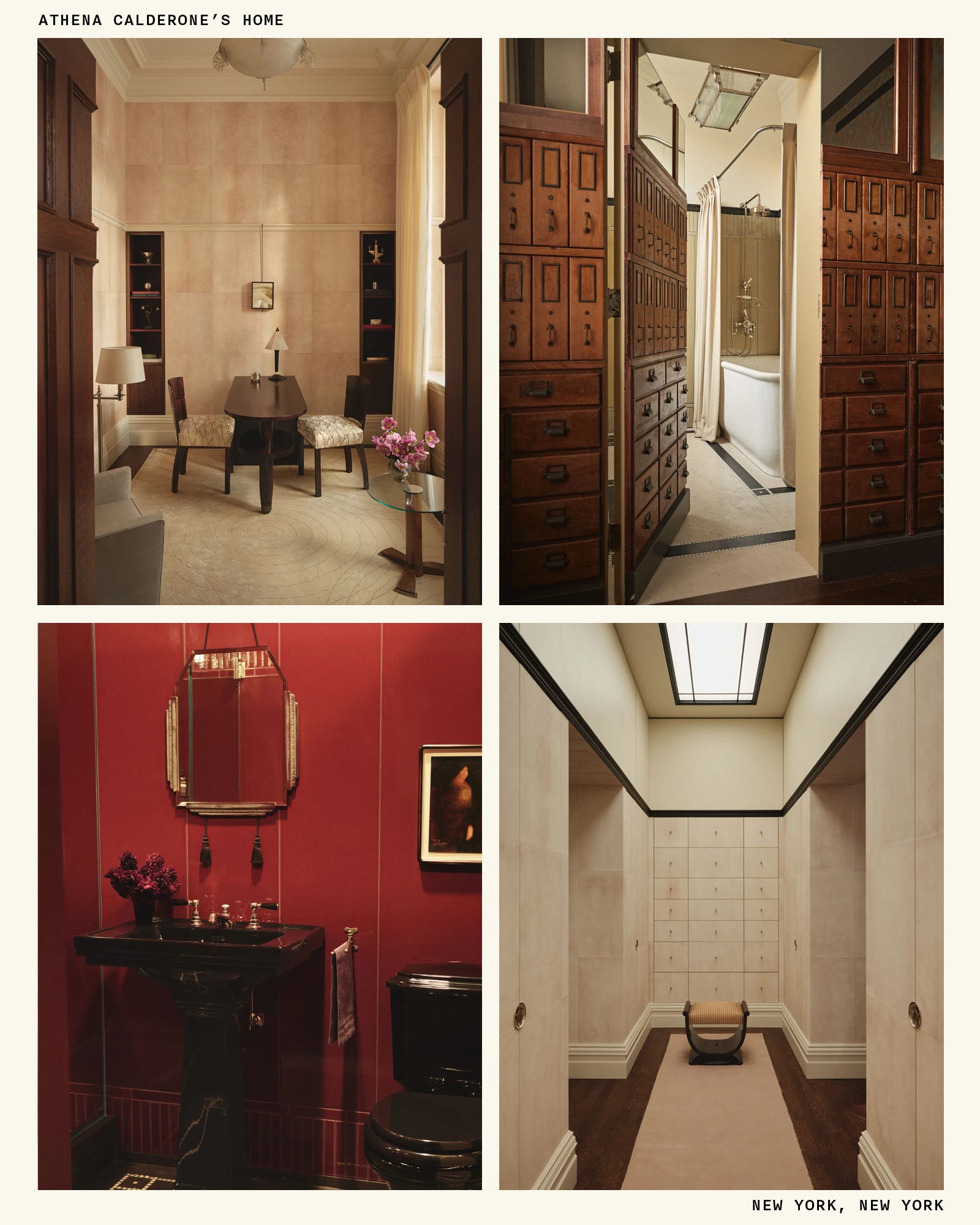
Athena Calderone’s Tribeca apartment is a perfect example—the bathroom alone is a masterclass in modern Art Deco. Her geometric mirror is from the 1930s and features two tassels hanging from the bottom. I love all the symmetry throughout her home—that closet!
And in restaurants, it’s all about the big marble bar, the circular booth, and the graphic chandelier. Restaurant design seems to be trending towards grandeur again (and I’m not complaining).
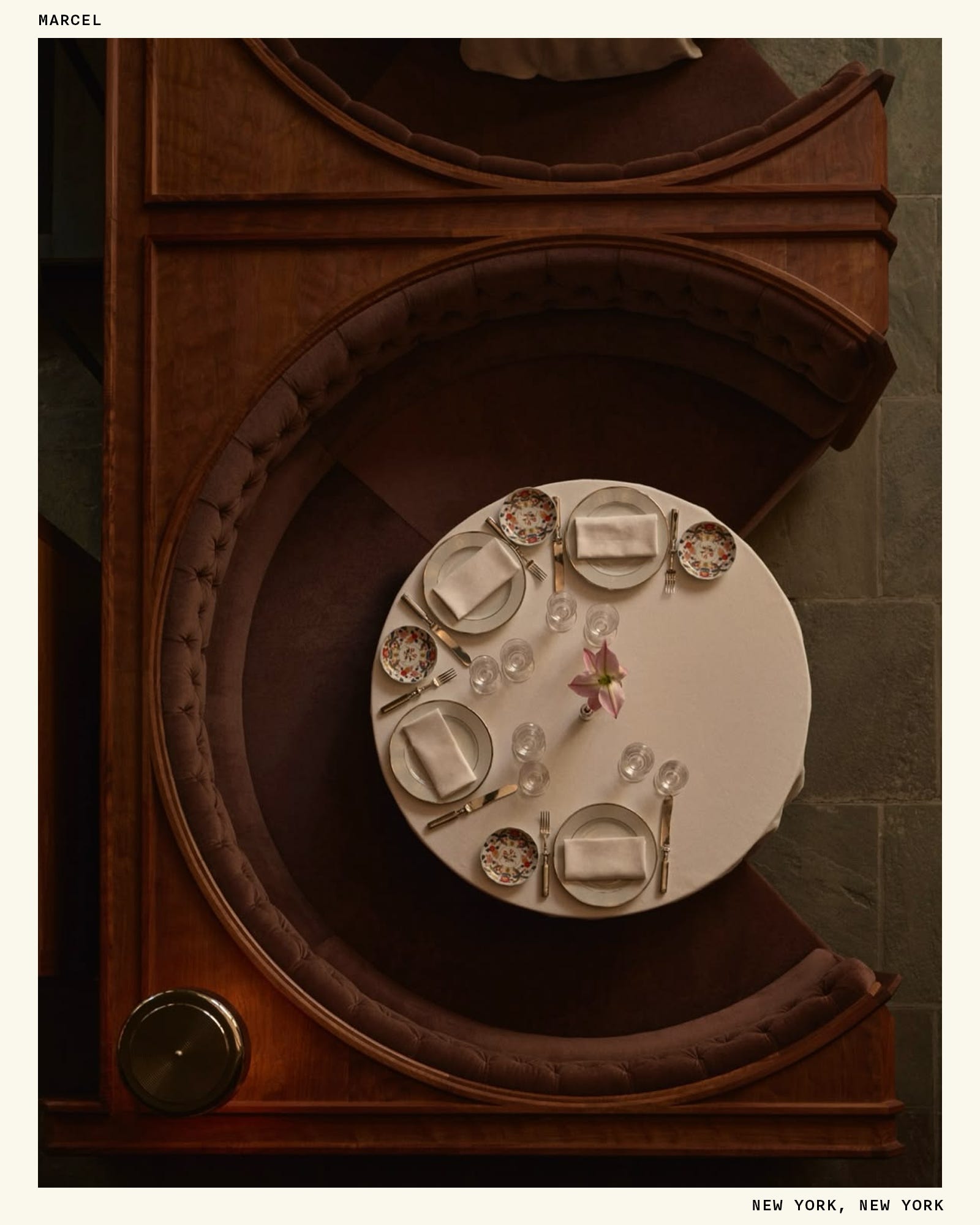
As much as I love a cozy neighborhood spot, there’s something about walking into a space like this that transports you to another time. I think that’s why we’re all gaga for Hillstone—the simple gesture of swapping out a martini glass feels like peak elegance, even in a glorified chain restaurant.
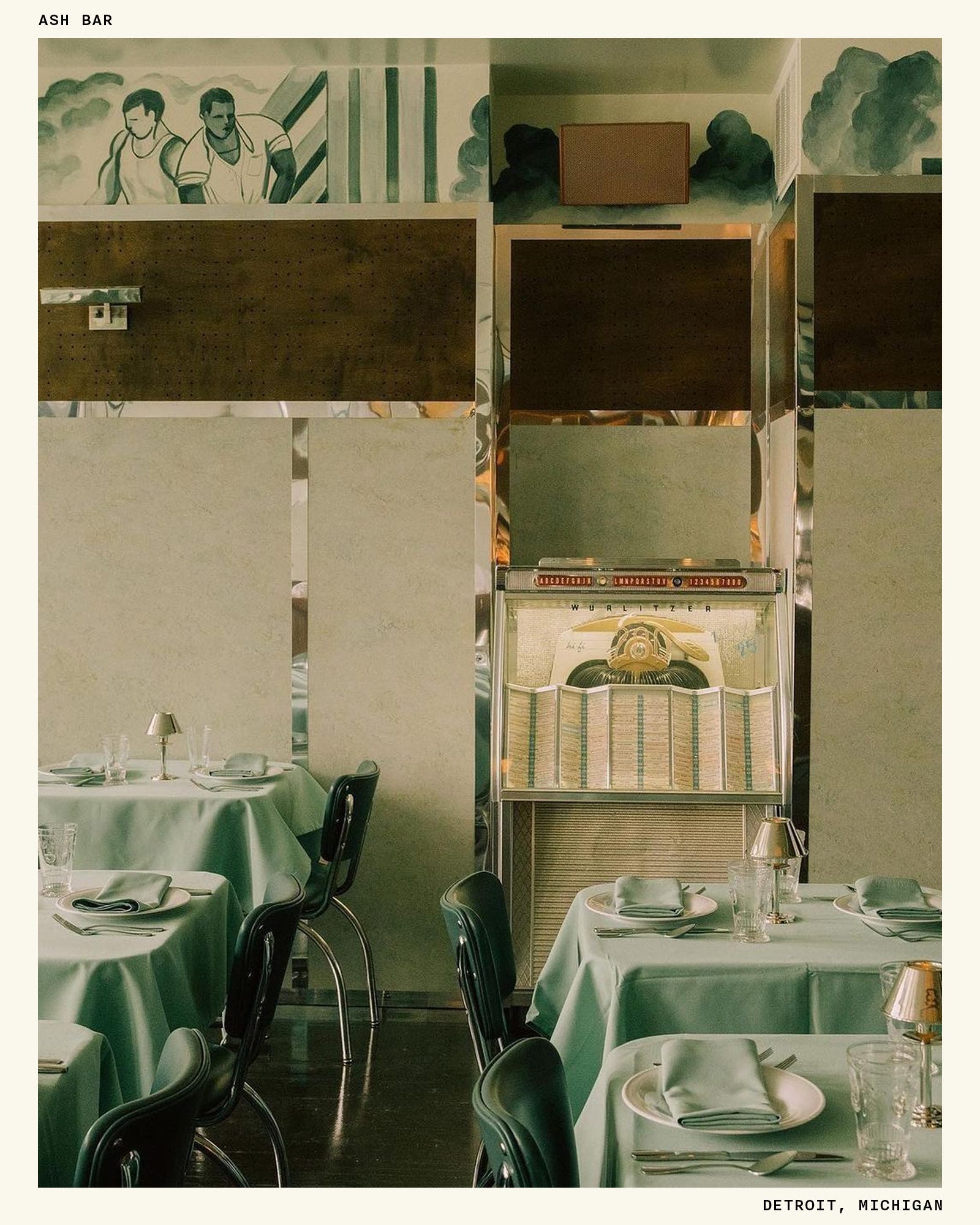
Anyway, sorry to that girl who hates Art Deco—you’re missing out.
x
Ali
If you enjoy reading À La Carte (thank you!!!) and want to show your support for my work:
Throw a like or comment on this post
Share this post with someone who might be into it
Follow me on Rec League (and download the app—it’s way more fun!)
And if you’d like to partner on an issue of À La Carte, shoot an email over to hello@alilabelle.co!
You know what I used to be team-her but recently I've become team-you on this. Also, I'm in Buenos Aires at the moment and there is art deco EVERYWHERE in the older buildings and Im loving it. Literally every entrance into an apartment building had these deco shapes, deep brass ironmongery and walnut panelling. I should probably take more photos of it.
Thanks for this. I'm an engineer who loves Art Deco from an infrastructure perspective. I always forget that it applies to what we put in those spaces.