

The Highly Sensitive Guide to Being Highly Sensitive
Tips to keep you from losing it

If you’ve been to therapy (or have a friend who has and loves to talk about it), you’ve likely heard the term “highly sensitive person”, or “HSP”. Coined by psychologist Dr. Elaine Aron in the ‘90s, a highly sensitive person is someone who has a heightened awareness of their environment and processes stimuli more intensely. They may be sensitive to sounds, or bright lights, or scratchy fabrics, or violent movies… It’s not a disorder, and it’s not something you can really test for; it’s just a set of traits you may or may not identify with.
A therapist recommended Dr. Aron’s book, The Highly Sensitive Person, to me a couple of years ago when I was having trouble processing some big feelings. I wouldn’t say I’m great with change, and it was a time when a lot of change was happening at once. I’ve always been an emoter with reactions that can sometimes be somewhat disproportionate to the situation (*cough* dramatic *cough*), so it was comforting to know that there was a whole group of people—15–20% of the population!—who also were living at the edge of their emotions.
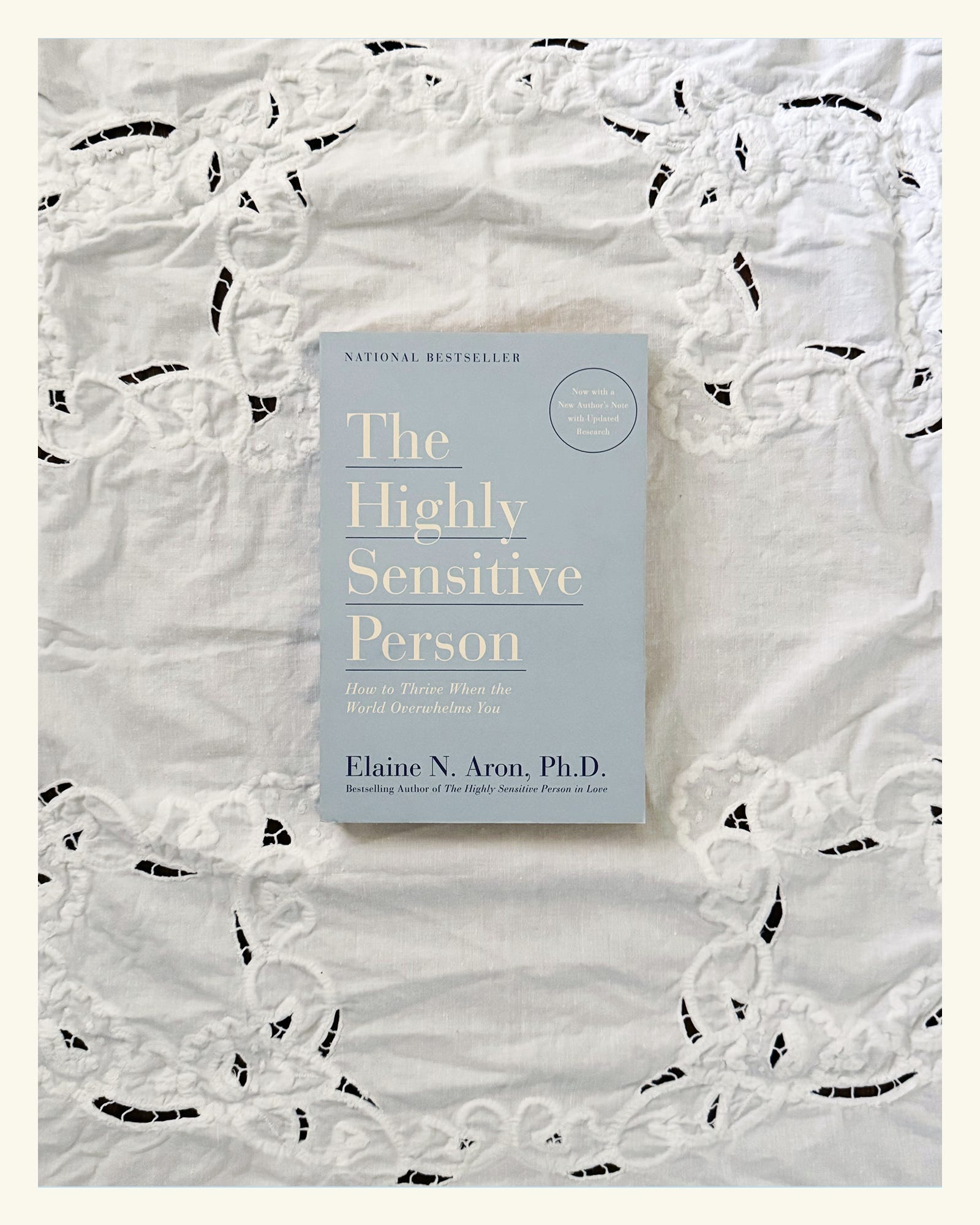
I don’t necessarily recommend the 20-year-old book—in retrospect, it feels narrow and outdated. And since then, I’ve gotten much, much better at self-regulating by connecting with my body and giving myself time to work through what I’m feeling before I react. But what I did find helpful about Aron’s theory was that, for all the annoyance and embarrassment I’ve felt over the years for being ultra-sensitive, there are upsides.
Supposedly, “highly sensitive people” are very intuitive, easily find the beauty in things, and can stay deep in thought for long periods of time. They crave close, one-on-one friendships, enjoy their own company, and have active imaginations. Many artists and creatives probably score pretty high on the sensitivity scale. I think anyone who identifies as highly sensitive probably sees those traits as the same things that make life feel meaningful and beautiful. Like perfectionism, sensitivity has its pros and cons, and learning how to navigate it is probably what’s kept me sane enough to grow a business, feel creatively fulfilled, and tune into what makes me happy.
I’m not a psychologist (obviously) or a therapist (duh), and I don’t really want to veer into mental-health discourse—there are other Substacks for that. The other day, a series of annoying things happened back-to-back that would’ve normally sent me spiraling, but I surprised myself by just rolling with it. It made me think about the little things I try to do to make room for my feelings without letting them take over, the habits that keep me clear-headed and creative (most of the time). I’m not perfect—one moment of frustration can still live in my body all day long—but I’m trying my best to intuitively work through it all.
So this is a bit of a guide to all of it—the things I do, big and small, to navigate the boundaries of aesthetic, emotional, and sensory sensitivity. I think most of us can relate to at least a few of the traits of a highly sensitive person—especially now, when every day is a fresh smorgasbord of global chaos—so there’s definitely something in it for everyone.
(None of this is a replacement for like, actual advice for your mental health. If you’re really going through it, please seek professional help.)
